 US Dollars


Thermal management systems need to compensate for the growing power density within electronics, removing greater amounts of heat from increasingly compact spaces. Applications such as uninterruptible power supplies (UPS), motor drives, IGBTs, energy conversion equipment, and radar systems require effective thermal management to maintain reliable operation.
While advances in heatsink technology continue to improve cooling capabilities, manufacturing limitations can restrict the size, geometry, and performance of available solutions. In some cases, the ideal heatsink design may exceed what can be manufactured through a single extrusion, skiving operation, or conventional joining process.
Friction stir welding (FSW) provides a way to overcome some of these manufacturing limitations.
Unlike conventional fusion welding, soldering, or brazing, friction stir welding joins materials without melting the base metal or adding filler material. The result is a high-integrity solid-state joint with characteristics that make FSW especially valuable for demanding thermal management applications.
What Is Friction Stir Welding?
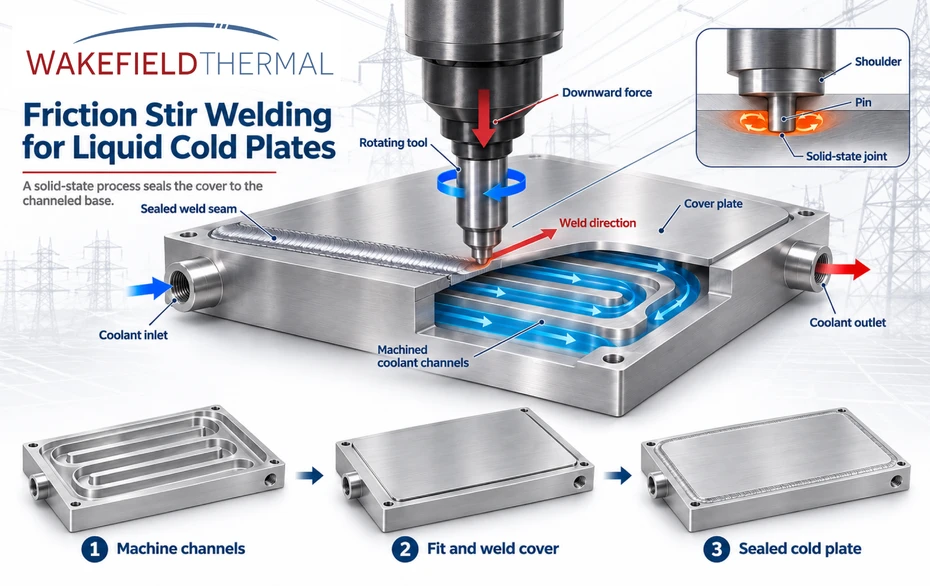
Friction stir welding is a solid-state joining process that uses a rotating tool, mechanical pressure, and friction-generated heat to join two pieces of metal. Instead of melting two pieces of metal and allowing the molten material to solidify, FSW uses mechanical friction and pressure to soften and join the materials while they remain in the solid state.
The process uses a rotating, non-consumable tool consisting primarily of a shoulder and a protruding probe, commonly called a pin. The tool is plunged into the joint between two workpieces and then travels along the joint line.
Friction and mechanical deformation generate heat, softening the surrounding material into a plastic-like state without reaching its melting point. As the rotating tool moves forward, it mechanically stirs the softened material from both sides of the joint. The material is then consolidated behind the tool under pressure, creating a continuous solid-state bond.
In simplified terms, the process occurs in four stages:
- Plunge: The rotating tool enters the joint between the workpieces.
- Heating: Friction and deformation generate localized heat, softening the material without melting it.
- Stirring: The rotating pin moves material around the tool as it travels along the joint.
- Consolidation: The softened material is forged together behind the tool, forming the completed weld.
The combination of rotational speed, travel speed, downward force, tool geometry, material properties, and joint preparation must be carefully controlled to create a consistent weld.
How Is Friction Stir Welding Different from Traditional Welding?
One of the primary advantages of friction stir welding is its ability to join metal components without introducing a separate filler material.
Traditional welding methods often use filler metals with mechanical and thermal properties that differ from those of the base material. In thermal management applications, these differences can create challenges when heat-generating components are positioned directly over a weld line.
For example, a high-power electronic device mounted across a conventional weld may experience different heat-transfer characteristics at the joint compared with the surrounding base material.
Because FSW joins the base materials without filler metal, it eliminates this particular source of material variation.
Brazing presents a different set of considerations.
Although the relatively small amount of filler material used in brazing may have limited impact on thermal performance, the elevated temperatures required during the process can alter the temper and mechanical properties of the base material.
Depending on the alloy and application, additional processing may be required to restore the desired mechanical properties.
Friction stir welding operates below the melting point of the base material and generally introduces less overall heat than conventional brazing processes. This can help preserve the properties of the surrounding material and reduce the need for secondary heat-treatment operations.
FSW does create a localized thermomechanically affected region, so the final material properties depend on the alloy and welding parameters. However, its solid-state nature provides an important manufacturing advantage for applications where maintaining mechanical strength and consistent thermal characteristics is critical.
Why Is Friction Stir Welding Important for Thermal Management?
FSW becomes particularly valuable when manufacturing liquid cold plates.
A liquid cold plate typically transfers heat from a heat-generating component into a circulating coolant. Internal channels route fluid through the plate, allowing heat to conduct from the component into the cold plate and then into the coolant for removal elsewhere in the thermal system.
Manufacturing such a component often requires creating internal channels in one section of aluminum and permanently joining another section over those channels. The resulting joint must provide a reliable seal while maintaining the mechanical and dimensional properties required by the application.
That makes the joining method critical.
Strong, High-Integrity Joints
Cold plates may experience pressure, temperature changes, mechanical loads, and repeated thermal cycling throughout their service life. The welded joint needs to maintain its integrity under demanding operating conditions.
FSW can create high-strength joints with strong fatigue characteristics because the process mechanically consolidates material without first creating a molten weld pool. Wakefield’s FSW cold plate technology is designed around these characteristics, including high joint strength and fatigue resistance.
Reduced Distortion and Greater Dimensional Stability
Thermal management components often require tight tolerances and flat mounting surfaces to establish effective contact with heat-generating devices.
Excessive heat during manufacturing can distort a component and make maintaining those tolerances more difficult. Because FSW avoids bulk melting and can create a comparatively narrow heat-affected region, it can reduce distortion and help maintain dimensional stability.
That can be particularly important for cold plates that must interface precisely with power electronics, industrial equipment, computing hardware, or other high-heat components.
Reliable Sealing of Internal Cooling Channels
A cold plate needs to do two jobs simultaneously: transfer heat effectively and contain the cooling fluid reliably.
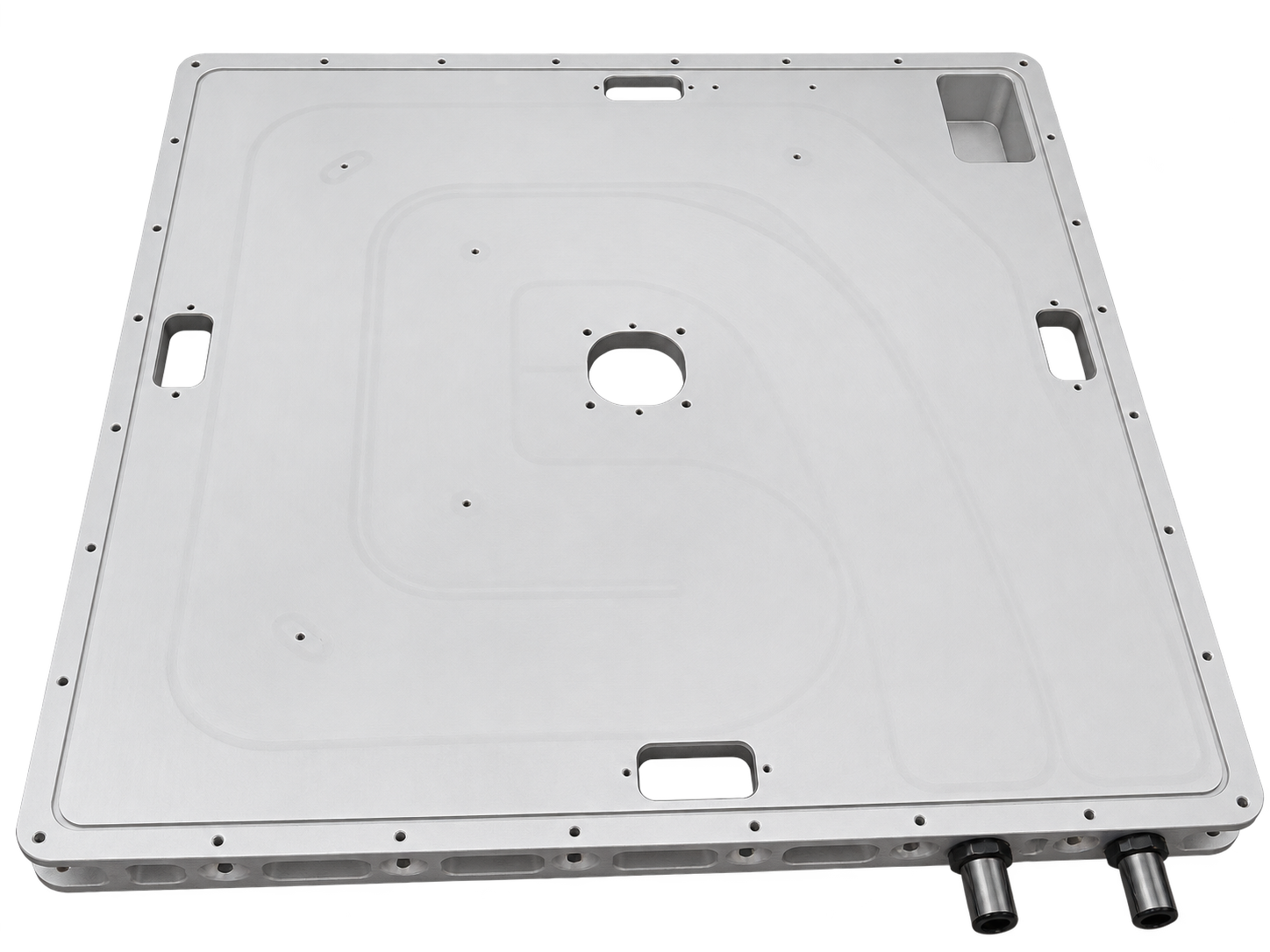
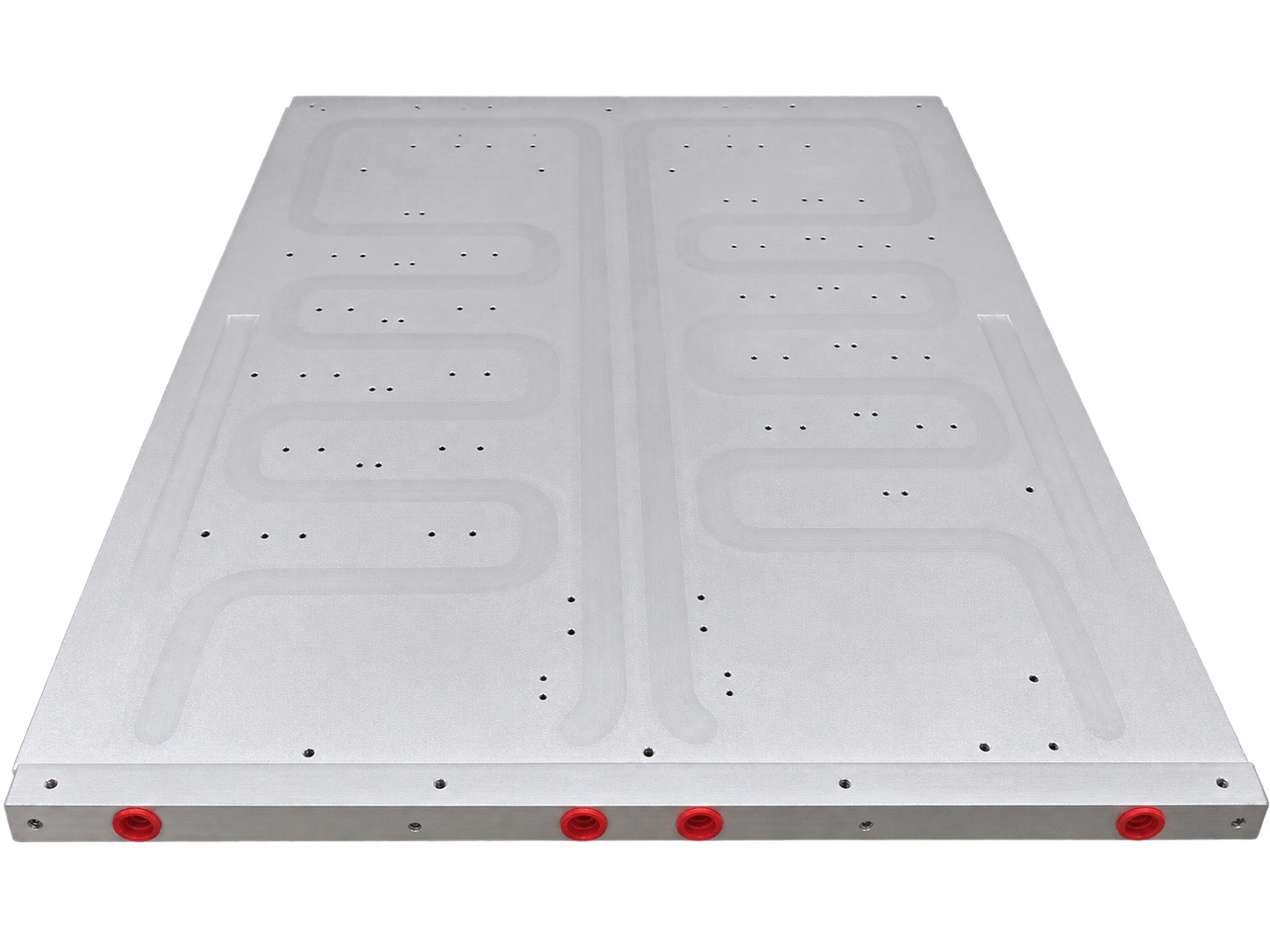
FSW allows manufacturers to machine complex flow channels into a plate and then permanently join a cover over those channels. The resulting welded structure can create a robust enclosure without relying solely on mechanical fasteners or seals along the primary joined surface.
For applications where coolant containment and long-term reliability are critical, the integrity of that joint is an essential part of the overall thermal design.
Extending the Capabilities of Air-Cooled Heatsinks
As electronic power densities increase, manufacturers are looking for ways to extend the practical capabilities of air cooling before transitioning to more complex liquid cooling systems.
High-aspect-ratio heatsinks provide one approach by increasing the available surface area for heat transfer within a defined volume.
Extruded, bonded fin, and skived fin technologies can all produce high-aspect-ratio heatsinks, but each manufacturing method has limitations.
Extrusion is constrained by the geometry and dimensions that can be produced through an extrusion die. Skived fin manufacturing allows thinner fins and higher fin densities but is limited by material dimensions and process capabilities. Bonded fin technology provides additional geometric flexibility but introduces a joining interface between the fins and base.
Friction stir welding offers another option by allowing manufacturers to join multiple heatsink sections into a larger assembly.
For example, an extruded heatsink can be manufactured at the practical limits of the extrusion process and then joined to another section using FSW. The same approach can be applied to skived fin heatsinks when a larger overall geometry is required.
This allows engineers to develop heatsink assemblies that may be too large or complex to manufacture as a single piece.
FSW does not make the individual fins more efficient. Instead, it allows manufacturers to create heatsink configurations that would otherwise be difficult or impractical to produce.
For applications such as UPS systems, motor drives, energy conversion equipment, and radar electronics, this additional manufacturing flexibility can help extend the use of air-cooled thermal solutions.
What Are the Advantages and Limitations of Friction Stir Welding for Cold Plates?
The principal advantages of friction stir welding include:
Its primary benefits include eliminating the need for filler metal, reducing the risk of material-property differences introduced by conventional weld fillers, and avoiding the high-temperature processing associated with brazing.
FSW can also support customized joint paths and geometries, allowing manufacturers to combine components produced through different manufacturing methods.
Depending on the application, the process may offer cost and lead-time advantages by reducing secondary processing requirements or simplifying assembly.
However, FSW also has limitations.
The process requires specialized equipment capable of handling significant mechanical loads. Tool geometry, weld depth, material selection, and joint accessibility must all be considered during design.
Additionally, FSW cannot independently create the extended internal surface area needed for certain cold plate designs. Those features must be manufactured separately before the joining operation.
Understanding these considerations helps engineers determine where friction stir welding offers the greatest value.
Wakefield Thermal’s Friction Stir Welding Capabilities
At Wakefield Thermal, we view friction stir welding as one of several manufacturing technologies available to solve complex thermal management challenges.
Our capabilities extend beyond FSW to include in-house extrusion, bonded fin, and skived fin heatsink manufacturing, giving our engineers the flexibility to evaluate multiple approaches to a customer's application.
This is particularly important because the most effective thermal solution may require a combination of manufacturing technologies.
An application might benefit from extruded heatsink sections joined through FSW to create a larger assembly. Another may require skived fin technology to maximize air-cooled surface area before using FSW to achieve the required overall dimensions.
For liquid cooling applications, our engineers can evaluate machined or skived internal features and determine whether friction stir welding provides an appropriate method for joining the completed assembly.
Rather than treating FSW as a standalone solution, we consider how it can be integrated into the broader thermal design and manufacturing process.
Through our advanced thermal manufacturing capabilities and ongoing investment in engineering and production technologies, Wakefield helps customers develop solutions that balance thermal performance, mechanical requirements, manufacturability, and cost.
The value of friction stir welding is not that it inherently increases thermal performance. It is that it gives engineers greater freedom to manufacture the thermal solutions their applications require.
Whether the challenge involves a large-format air-cooled heatsink, a complex liquid cold plate, or a combination of manufacturing technologies, Wakefield Thermal can help identify the right approach.
Contact Wakefield Thermal to discuss how our friction stir welding and thermal manufacturing capabilities can support your next application.